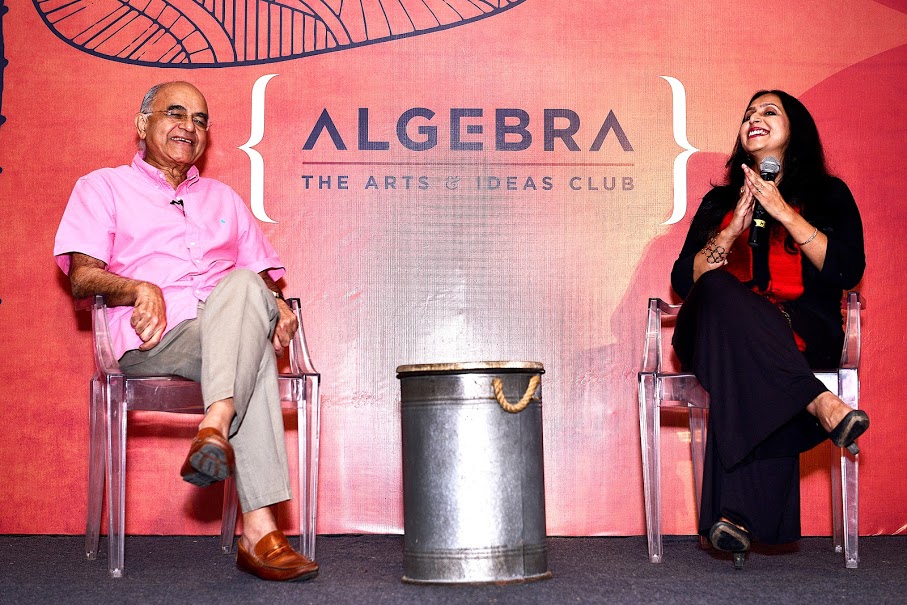
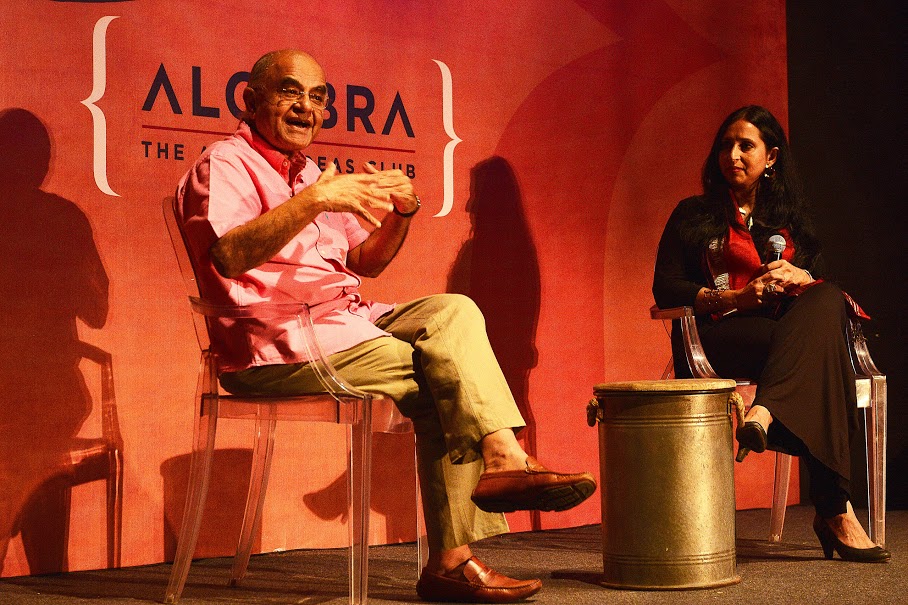
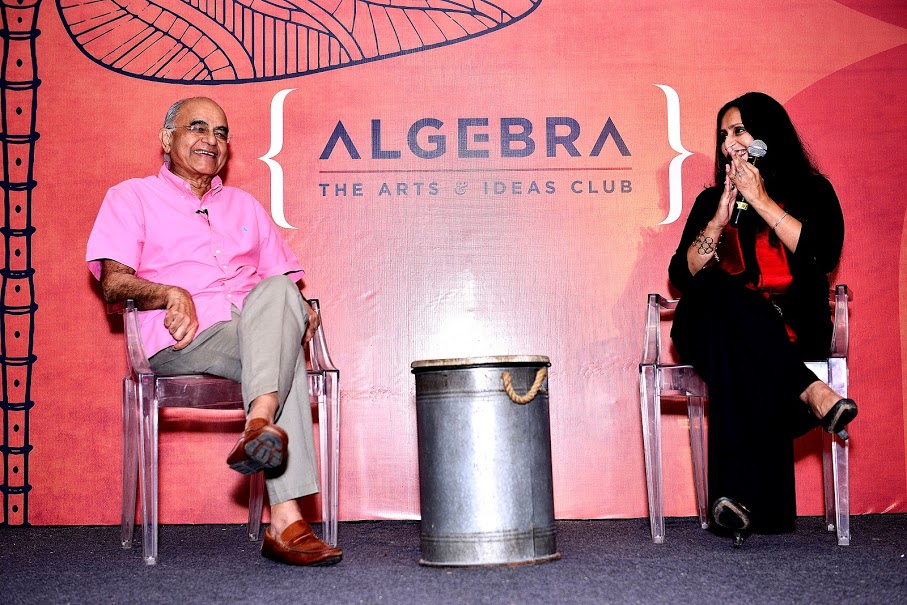
Gurcharan Das tells the epic story of desire across time
You’d think a man who attended Harvard Business School, headed Procter & Gamble India and went on to be MD of P&G Worldwide would know a thing or two about the economy, about business, about global trade.
You’d be right.
You wouldn’t, necessarily, show up to hear him speak about desire, love, sexuality and that highly misunderstood word, ‘kama’.
You’d be wrong.
Gurcharan Das is that increasing rarity: a polymath. His celebrated books India Unbound and The Difficulty of Being Good cast a contemporary eye over two defining philosophical strands of Indian thought: artha and dharma. (Amazon has them here and here.)
It’s only natural, then, that he deep-dive into kama, the complex world of desire and love, next.
In an exclusive pre-publication conversation for Algebra – the book is still some way from making it to bookshelves – Gurcharan offered fascinating insights into the origins and meaning of kama. How the Indian ancients elevated the idea of erotic love as one of the key “aims of life”; how there was no concept of guilt in the ancient Indian mind as opposed to the Judaic-Christian tradition; and how the Hindu cosmos itself was born out of desire in the One.
Evoking delightful stories from the Vedas to the epics, he also spoke of how Indian civilisation had always been divided between “Kama optimists” and “Kama pessimists”: those who embraced the idea of erotic love as a profound cosmic force, as well as the most fundamental and creative human impulse versus those who saw erotic love as demonic, destructive, and something to be renounced.
Perhaps the most piquant and provocative takeaway of the evening was that while ‘dharma’ represents duty to others — a concept most of us are familiar with — kama represents an equally important thing: the idea of duty to one’s self.
Gurcharan’s exploration of the domain has academic rigour, but he is above all a storyteller, so we were at once captivated, engaged, informed and as always, pushed to think a little deeper, a little harder.
Watch the full session above.